
Archive for the ‘Business & Economics’ Category
Loss aversion looms large in branding
Not long ago I believed sustainable business, renewable energy and the socially responsible consumer were on the verge of going mainstream. I know they will get there eventually, but that day now seems farther away.
Those of us impatient for change — in our organizations, among our customers, within society — would do well to sit with this fact: People are more motivated to avoid losses than to achieve gains. How much more? About twice as motivated.
This is just one of many thought-provoking research findings explained by preeminent psychologist Daniel Kahneman in his latest book, “Thinking, Fast and Slow.”
This is my second post exploring what some of Kahneman’s findings could hold for brands and the organizations and leaders managing them. Earlier I looked at the distinction between plausibility and probability in the brand stories we tell. Here I’m interested in what humans’ deep-seated aversion to loss means for purveyors of change. (more…)

Tags: aversion to loss, brand, Branding, Daniel Kahneman, Loss aversion, storytelling, Thinking fast and slow
Posted in Books, Branding, Business & Economics, Communications, Marketing, Nonprofits, Uncategorized | No Comments »
Is your brand story merely plausible?
Some years ago I led the public relations launch of a next-generation “bet your company” software platform for my employer at the time. The product promised to transform an industry and ensure the business retained its star status. Those of us charged with the product marketing did a fabulous job of storytelling. We had the national trade media eating out of our palms, giving us positive, prominent coverage in one publication after another.
But there was one small problem: Our firm never delivered the product — at least not nearly as advertised.
We had sold an incredible story, not an incredible product.
Today, I am looking back at that experience through the lens of one of the most provocative books I have read in years: “Thinking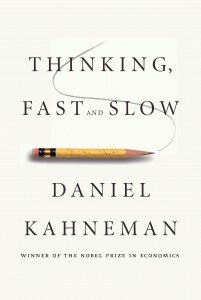 , Fast and Slow” by Daniel Kahneman, winner of the 2002 Nobel Prize in Economic Sciences. Kahneman is actually a psychologist but his work around decision making challenged the prevailing rational model of judgment in economics. He is professor emeritus at Princeton University. (more…)
Tags: brand, brand story, Daniel Kahneman, nonprofit brand, Thinking fast and slow
Posted in Books, Branding, Business & Economics, Communications, Marketing, Nonprofits, Uncategorized | No Comments »
Mission driven or mission accomplished?
At the heart of businesses I admire most are missions that aim to make the world a better place. It’s an attribute they have in common with most nonprofits. They also share with nonprofits a tendency to view their mission as a driver of their organization, not an end they plan to one day reach.
In a recent Huffington Post column, nonprofit consultant Thenera Bailey says social change organizations understand the need for long-term impact.
But too often along this road of change, many of us somehow get sidetracked. Creating sustainable solutions to social problems gets replaced by the creation of solutions that will sustain our organizations and keep our doors open… Non-profits need to be in the business of putting themselves out of business — not with unwise spending, but with strategic and long-term solutions that will put an end to their cause.
Why not hold business to the same standard? (more…)
Tags: B Corps, benefit corporations, mission accomplished, mission statement, mission-driven, Patagonia
Posted in Branding, Business & Economics, Communications, Marketing, Sustainability | No Comments »
The fantasy of business independence
A Google search on “independence” returns 261 million results. It shows 7.5 million results for “interdependence.” “Independent business” generates 6 million search results vs. 27,500 for “interdependent business.”
The results aren’t surprising, although they are telling. Independence is a cherished trait for governments, businesses and individuals, especially in a country whose Founding Fathers didn’t put their lives on the line for a Declaration of Interdependence.
And yet, to be truly independent seems largely a fantasy. Are we ever not subject to the authority of someone else, not influenced by the thoughts or actions of others, not depending or contingent upon something else for existence or not relying on others for support in one form or another? (more…)
Tags: independent business, interdependence, interdependent business
Posted in Business & Economics, Sustainability | No Comments »
Creating distinction in professional services
Two recent branding engagements with clients in very different professional service areas led me to the same conclusion: Even the act of establishing meaningful distinction in your service market or niche creates distinction. In other words, you are distinct for being distinct. All of your competitors blend into a bland background of sameness.
 That’s how it is across professional service markets such as legal, health care, accounting, business consulting, marketing, engineering. Setting aside superficial points of distinction such as name and logo, too few firms are finding substantive ways to stand out from the crowd. And no good comes from that, as business advisor Scott McKain argues in his 2009 book, “Collapse of Distinction”:
If you cannot find it within yourself to become emotional, committed, engaged, and yes, fervent about differentiation, then you had better be prepared to take your place among that vast throng of the mediocre who are judged by their customers solely on the basis of price. It is singularly the worst place to be in all of business.
And yet, that’s where most businesses, service or otherwise, find themselves. Rather than dive into the many reasons for this state of affairs, I’d like to address just one: Too few in business understand how to create relevant distinction. (more…)
Tags: "Collapase of Distinction", brand distinction, business distinction, competitive differentiation, professional services distinction, relevant distinction, Scott McKain
Posted in Branding, Business & Economics, Communications, Marketing, Uncategorized | No Comments »
Branding lessons from an old hometown
Two weeks ago I returned to my old hometown in Minnesota for the first time in 18 years. And I still can’t shake the obvious: change is constant. Whether we like it or are prepared for it or not.
I could only identify two stores along the three-block downtown that were there in my childhood. Most of the businesses appeared to be on life support. Further south from downtown a once modest commercial stretch reminded me of an abandoned cowboy town. Only the tumbleweed was missing. My high school had been leveled and rebuilt on the north edge of town. My parent’s last and once-proud home, across from the school, stood lifeless. And the downtown store my dad started in 1948 and sold in 1980 is teetering on the verge of going out of business. Perhaps the hardest change of all to swallow.

Hometown lake in Minnesota
Little about my hometown seemed as I remembered it, except the pretty lake at its center. It hadn’t died as a community. It only felt that way. So much that anchored my memories of growing up there has now disappeared, if not physically, then emotionally. I told my wife the last morning we were there, I’m not sure I will ever have the need or desire to return. (more…)
Tags: brand, business as usual, change, in the moment, Occupy Wall Street, storytelling
Posted in Branding, Business & Economics, Marketing, Uncategorized | No Comments »